
One word changed David Phelps’ life in an instant. “Leukemia.” At the peak of his career, earning a high income and owning his own dentistry practice, his daughter, just a toddler at the time, had her life on the line. David made good money; he had a life worth envying, yet none of it could give him more time with his daughter.
But David had one thing many of his fellow dentists did not—an income-producing asset portfolio. He sold his practice, dedicated his entire life to ensuring his daughter entered remission, and finally, recovered. That’s when David realized he broke out of the high-income trap—he had achieved true freedom: freedom of time.
Now, leading Freedom Founders, David assists other high-net-worth individuals in exiting the golden handcuffs and entering a new stage of freedom, not just of time, but of creativity. The wake-up call in David’s life was clear—income-producing, durable assets support a life where you make the choices. A business or well-regarded career, no matter how successful, is still a fetter to freedom.
Are you able to escape the high-income trap, too?
Sage Wisdom from Today’s Episode:
- What truly funds your freedom in life and why it is not a bigger paycheck
- The “semi-passive” assets that David invested in to regain control of his time
- The common mistake successful founders and business owners make that costs them decades
- Are you building a life of just extraordinary income, or extraordinary optionality?
- Stop waiting for life’s wake-up call—you’re never too early to invest for durable freedom
Chapters
00:00 Intro
01:52 The High-Income “Trap”
05:47 Life’s Wake-Up Call (Cancer)
08:53 Assets Mean Freedom
14:43 Pain Is an Opportunity
21:03 Quitting Dentistry, Finding True Freedom
29:29 The Asset Shift to Come
38:59 Invest for Money or Time?
44:53 Control Your Capital, Not the Asset
46:08 Holding on to Cash?
48:25 Develop Your Investing “Judgement”
53:13 David’s Sage Principle
54:43 Connect with David!
Resources Mentioned
Connect with David on LinkedIn
Are you a high net worth investor with capital to deploy in the next 12 months? Build passive income and wealth by investing in real estate projects alongside Brian and his team!
Learn more from Brian and listen to past episodes of The Sage Investor
Connect with Brian on LinkedIn
Episode Transcript
Episode Summary
High-income professionals like doctors, dentists, and business owners often find themselves trapped by their own active earning success. While they build impressive careers and societal wealth, their lifestyle remains entirely dependent on their ongoing personal presence and effort. In this briefing, Dr. David Phelps joins host Brian Spear to analyze how converting active professional earnings into income-producing, tangible assets creates replacement income and true optionality. Through his personal experience navigating his daughter’s life-threatening health crises while operating a successful dental practice, Phelps illustrates why net worth alone creates a false sense of security when cash flow and time freedom are missing.
The discussion outlines key strategies for financial transition, emphasizing the shift from being an active operator to a semi-passive capital allocator who controls their own destiny. Key frameworks highlighted include evaluating opportunities through a decision filter of freedom versus constraint, managing portfolio allocations dynamically like a waiter balancing a platter, and focusing on asset cash flow rather than market accumulation numbers. Business owners and high-net-worth investors can use these decision-making models to stop trading time for paychecks, avoid the risk of sequence-of-returns or market volatility during retirement, and intentionally structure capital to support personal values and family needs before external crises force a change.
Key Takeaways
- High active income creates golden handcuffs if lifestyle maintenance requires continuous personal labor, whereas true financial freedom requires building replacement income through cash-flowing assets.
- Evaluating financial decisions through a strict decision filter—asking whether an option creates more personal freedom or more operational constraints—helps investors avoid low-yield, time-intensive commitments.
- High-earning professionals must transition from active operators to thoughtful capital allocators to decouple their earning potential from their daily personal time.
- Net worth accumulation numbers offer a false sense of security compared to durable asset cash flow that supports living expenses regardless of broader market cycles.
- Developing independent investment judgment and surrounding oneself with experienced peer networks provides greater long-term downside protection than blindly delegating capital management to third parties.
Key Topics Covered
- The high-income trap and golden handcuffs in professional careers
- Active income vs. passive replacement income
- Capital allocation and moving from active operator to semi-passive investor
- Dynamic portfolio allocation across tangible hard assets and financial markets
- Decision filters for evaluating lifestyle choices and investment options
- The importance of cash flow over static net worth accumulation
- Peer network masterminds and sharpening investment judgment
Episode Chapters
00:00 Intro Brian Spear introduces the episode topic of golden handcuffs and high-income professionals who remain financially trapped despite external career success.
01:52 The High-Income “Trap” Dr. David Phelps explains how societal metrics define success by lifestyle and income, leaving professionals without true time freedom.
05:47 Life’s Wake-Up Call (Cancer) David shares his personal story of his young daughter’s severe health challenges and how her liver transplant forced him to evaluate whether his practice gave him true freedom.
08:53 Assets Mean Freedom David recounts starting real estate investing during dental school, building leverage responsibly, and using rental equity to buy back time during a family crisis.
14:43 Pain Is an Opportunity Brian and David discuss how life disruptions and unexpected health events serve as wake-up calls to clarify priorities and transition into new life seasons.
21:03 Quitting Dentistry, Finding True Freedom David reflects on selling his dental practice in his 40s to prioritize family time, leading to the creation of Freedom Founders to help other high-earners.
29:29 The Asset Shift to Come The conversation covers economic cycles, the difference between paper financial markets and tangible hard assets, and managing portfolio balances dynamically.
38:59 Invest for Money or Time? Brian and David address the cash flow riddle, highlighting why managing too many individual single-family properties can turn into another job rather than passive freedom.
44:53 Control Your Capital, Not the Asset David and Brian compare capital allocation to acting as a chairman of the board, using Warren Buffett’s structure as a model for working with skilled operators.
46:08 Holding on to Cash? David advises high-earners who experience cash windfalls to slow down, build education, and evaluate market dynamics before rushing into unfamiliar deals.
48:25 Develop Your Investing “Judgement” David outlines his approach as a trusted guide, encouraging investors to learn decision frameworks, ask better questions, and consult expert advisors.
53:13 David’s Sage Principle David shares his core principle: active income funds today’s lifestyle, but building optionality determines how you live when life changes.
54:43 Connect with David! Brian wraps up the conversation, sharing where listeners can connect with Dr. David Phelps and access resources from Freedom Founders.
Full Transcript
[Transcript begins]
Brian Spear: Sometimes success looks very impressive from the outside, but feels very different when you’re living inside of it. You can build a respected career, earn an extraordinary income, and create a lifestyle that most people would consider successful, and still discover that nearly all of that depends on you continuing to show up and produce day after day after day. And that is the high-income trap of Golden Handcuffs. Welcome back to The Sage Investor. I’m Brian Spear, and my mission is to help you generate cash flow and build legacy wealth in a tax-efficient manner, because that’s what I’m trying to do for my family, and I’m sharing all the secrets that I learned along the way. My guest today is Dr. David Phelps. He’s got a track record of building great things, but it was the exact feeling of being trapped in his professional career that, in a difficult time of life, that ultimately altered his path. He had built a successful dental practice while quietly investing in real estate on the side, but when a serious family health crisis demanded more of his time, he was forced to confront a question that most people avoid. Had he actually built freedom or had he simply built a very valuable life that still depended on him personally being in the seat. I want to discuss how to convert active income into replacement income, why net worth alone can create a false sense of security, and how the strategies that build wealth early in life can later become another source of constraint. We will also explore the difference between outsourcing financial decisions and becoming a thoughtful capital allocator. Someone who ultimately develops the judgment, relationships, and discipline to control their own financial future. And at the center of this conversation is a simple idea. Income pays for your current lifestyle. Optionality determines how you will live when life inevitably changes. Welcome to the show, Dave. It’s an absolute pleasure to have you here, sir.
Dr. David Phelps: Brian, I love having conversations with people like you, and I think there’s so much opportunity we can give to people who are listening in today, so I’m ready to dig in.
Brian Spear: Yeah, likewise, likewise. You know, you’ve got a ton of experience, and I can’t wait to share a lot of that wisdom with the audience, right? And it’s kind of interesting. Oftentimes, there’s some confusion between what success actually is, right? From the outside looking in, oftentimes, success looks obvious to folks. You know, doctors and dentists oftentimes will have a thriving practice, a great income, they spent years building a really successful and respected career. But you’ve said some things in prior podcasts and media that you’ve put out there that I think surprises a lot of folks. That basically a lot of high-income professionals, they’re still financially trapped. So I want to unpack why that ultimately happens, right? By this time with Freedom Founders, you’ve spent years around highly successful folks, doctors, dentists, and the like. What tells you that somebody is wealthy on paper, right? Kind of like successful in the eyes of society, but is still financially trapped.
Dr. David Phelps: Yeah, I think the disparity, Brian, is that society and professions, the different industries defined success by societal metrics. And that can be a lot of times in lifestyle, where one lives and where the kids go to school and sometimes with cars you drive or the clubs you belong to. I’m not judging any of that. But in terms of success, the problem with success, focusing on that kind of success, lifestyle, that’s focused on income. And yes, everybody, no matter where you are in life, starting out or in mid-career or in a business profession, driving revenue and creating income is the gift we’re given if we’re good at doing that. So yes, go to it. The problem is that higher income becomes a trap because if, your income is dependent upon what you do, the skills, the hard work, the education that you put into it, great, check the box. But if your income and therefore your lifestyle and your measurement of, or definition of success and wealth is based on your driving that income, you’re not free. You’re not free, and that’s the problem. And I’d say that people think, well, you know, if I just have more income, then I’ll get free. Doesn’t happen. It doesn’t happen without a real mindset shift about what is this all about? And I know we’re gonna get to it, and I’ll tell a bit more about my story at the right time, but I’m a big fan of taking income that anybody can derive from their work, whatever that might be, as an employee or an employer, a business owner, and turning that into assets that will then start producing what I call replacement income that little by little over time can start making the need for someone to work optional. And I’m all about not retiring. I’ll never retire as long as I can be relevant and my mind works. I want to still do things, but I want to do things that I love to do. And that’s the whole key. That’s the whole benefit of understanding this spectrum of earning income, getting to a level where you’re ahead of paying the bills every month, which is where we start out in life. You got some excess. It’s like, now, what do I do with that excess? And that’s the whole key right there. So I’ll stop and let you take the next step.
Brian Spear: Yeah, that is the game. And I share the mindset on the retirement stuff, right? I’ve had many different people ask me, like, when I’m going to retire, right? I’m fortunate to have that financial freedom that you’re referencing where passive income exceeds expenses. But my response is always retire from what? I mean, what is better than this? I wake up every morning, get to do what I enjoy doing with the people that I enjoy working with. It’s just absolutely beautiful. Retire from what? Sam Zell was once asked that, right? He built this unbelievable business, $5 billion at the time and beyond. And ultimately, he’s getting up in age, 60, 70, 75 years old. When are you going to retire? Retire from what? What else am I going to do? This is so much fun and just doesn’t even feel like work. But the interesting thing that you’re talking about and the difference between being successful in the eyes of society and ultimately having that passive income is that it’s not something that is lost on you. You’ve actually just you’ve lived this yourself, right? You’ve actually lived this. So when did your own success in dentistry begin to feel less like freedom and more like something that you couldn’t easily leave?
Dr. David Phelps: Yeah, it really came at a time in my life that today was really an inflection point for me, Brian, and it wasn’t planned. I didn’t see it coming. My daughter, who will be 34 this week, but back when she was very young, she went through some relatively major health crises. She had high-risk leukemia, cancer, when she was very, very young, two and a half to five, and then she had epileptic seizures later for another four years, which just kept life and her ability to move forward as a young person, very constrained. And then at age 12, she was in end-stage liver failure because of all the chemo, all the seizure medication, it just essentially blew out her liver and she had to go get a liver transplant. I’m going fast here to say that was a trying time for her, obviously, as a young person, trying time for her parents to go through. And what I realized finally, I guess finally, in the hospital recovering from the liver transplant is that’s when I realized that, you know, all the education that I had, the training, the wisdom, the business asset that I, yes, owned, but also operated hands-on, active income, was not allowing me to be free enough to be where I needed or wanted to be more. And that was with my daughter. Because after, like, two times, cancer, epileptic seizures, and now a third time with a liver transplant. I’m wondering if God is trying to slap me one more time and saying, hey, David, you’ve done good work, buddy. You know, you’re taking care of your family and you’re taking care of patients and your business, but I want you to focus on something different. And if not for Jenna’s hard life in the liver transplant, I probably would just kept doing because that’s what we do. So I realized that my dependence on income to carry the day didn’t allow me to be free to be with her. I was back and forth. It’s like, well, I want to be in the hospital with her, but then I got to go back and deal with the practice. That was really tough. So I made a decision just a few weeks after, well, probably within a week, it really came quickly. It’s like, okay, I need to change this. And for me, it was sell the business, sell the practice. And I was in my 40s. And most people say, you can’t do that. That’s irresponsible. Why would you even think about doing that? I get it. Your daughter’s sick. Good for you for thinking that way, David. But you really can’t do that. No one else would think about doing that. And what most people in my circles of influence, in medical and dental circles, people I knew, most people me and most friends didn’t know that I started relatively early, actually before I became a dentist, in investing in assets, something that we’re both very familiar with and we both like. And the asset that I chose back when I was in college, I’m in college and I’m reading books about investing. I just thought, you know, in my mind, I’m just thinking, I wanna be an investor. I didn’t really know what being an investor meant. It just sounded like it was something I should do. And so Kiyosaki’s book wasn’t out back then. This was going back in the 70s. And there was no internet, there was no social media. I had to actually buy books at Walden bookstore or go to the library. But there were still good books on investing. And when I compared and contrasted, what I’d just say today would be financial markets. And back then, there were mutual funds back then. And so you could look at Morningstar and platforms. And so I read something about that. And then I read books on just basic real estate, basic, fundamental, single family real estate. I still got those books and those books, I think just changed my life. And I’m thinking, okay, compare and contrast the two. Both could be a good platform, not dissing the financials products, but I wanted something that I felt like I had some control over. Exactly. Because, yeah, well, because look, I built a business. I mean, if you go into business for yourself, you did it for some reasons, and one of the reasons was you wanted to make the decisions, good, bad, or otherwise, there’s a lot of responsibility, there’s a lot of things that as a business owner, sometimes we regret that we went into business. But overall, you always think, yeah, I’m glad I did this. At the end of the day, I’m glad I was in charge. And I wanted to be somewhat more in charge of what I invested in. And single family houses at that time, you know, 40 plus years ago, made a lot of sense. So I made my investment, started out when I was in my first year in dental school. And then when I graduated, I continued on and worked. So by the time Jenna was in the hospital with her liver transplant, I was about 20 years into practice, but 20 years also into building assets, which I bought with leverage, good leverage, smart leverage, but I also took the extra money that, that gap, the margin from my lifestyle, which I kept always kept my lifestyle relatively moderated. I didn’t just escalate like a lot of people do. And I took the gap, the discretionary income, instead of putting it in the traditional 401k, I took it and I used little bits of it to put as down payments, leverage, and the rest of the excess, I would just pound those loans down, you know, the snowball effect. I just pounded them down. And when Jenna was in the hospital, that’s the first time I really said, what do I really have? Because when you’re in the middle of making money in your profession, even whatever investments you have, you’re not really counting it up and maybe you can look at a net worth statement once in a while, but it’s not about net worth. It’s like, how can I take equity and turn it into income to buy back time. And right then and there, when Jenna was in the hospital, I’m looking at her and she’s in the bed and she’s sleeping most of the time. And she’s got all kinds of tubes and monitors on her. And she’s got a row of medications she has to take now because she has to be immunosuppressed with an organ transplant. And that really brought to me, it’s like life is fleeting. Life is fleeting, we never know. So what am I doing trying to, what am I trying to build here? Or you know, what am I trying, is there some moat, some mountain of security that’s gonna like do it for me? No, there isn’t, I needed time. So I had enough equity, built up with enough cashflow from the equity, from the rentals and selling my practice, which I sold at a bit of a discount, by the way, just saying I didn’t try to top it out because, well, I was motivated and I had enough. So it’s like, I needed time more than I needed more equity. So I sell the practice. I take that and I knew where to put it. Key thing, I knew where to put it. I had relationships, I had a network. So I knew where to go with it to produce a little bit more cashflow. And by the time I penciled it out on the back of a napkin, today, what I call the freedom number, it’s like, I got enough without going to do one more day of work, at least for a period of time. Maybe not for the rest of my life, not saying that, but I could buy back time. And then I could figure out the right time. Do I go back to dentistry? Yeah, I could go back to dentistry or who knows. But right then and there, it was like, I wanna be where I could be free to be with my daughter, whether she’s in the hospital recovering or she’s at home or maybe back into school and enjoying life. I got to be there because I don’t know how many chances at bat at being a dad I’m going to have. And that’s really the turning point for me.
Brian Spear: It’s beautiful. It’s so beautiful. And I couldn’t agree more. So many different things we could just talk about and wander about, given the story that you just told a wonderful, wonderful story. Unfortunate that it came through those sorts of circumstances, right? But sometimes intellectual decisions will change the trajectory of your life. And then sometimes life will just punch you in the face and you just will need to make decisions based on circumstances, right? Life’s circumstances. I’m glad that you were able to see the light and ultimately wanting to value time more than money. Oftentimes, earlier on in folks’ lives, they value money so much higher than they value time because they believe they have all the time in the world. And then what happens is these two lines, right, over time, begin to change dramatically where over time, as people become to age 60, 70, 80 years old, their value of money goes down tremendously. And the amount of value that they place on time is tremendous, right? When folks are on their hospital bed and it’s the last week of their lives, they would virtually give up everything that they own for just one more week, two more weeks of time with friends and family. And the sooner that we realize that time is far more valuable than money, the better it will be for everybody involved in our immediate network, my humble opinion. So beautiful, beautiful story. You were going to say something.
Dr. David Phelps: Yeah, I was going to say whenever you’re hit in life by a surprise, an event, something that happens that wasn’t on the vision board, and not necessarily something that you even caused by decision, lack of decision, whatever it might be, it’s really hard when it hits you because you’re never prepared for whatever that is. And it could be something in the markets. It could be something economically. There’s all kinds of things that can come and smack us. When it does, certainly it’s a time when you have to dig in and you have to get real clarity on, like I did, what’s important, whether it’s to keep a business going or it’s to focus on time with family or whatever it might be. But I’m a big faith believer, and I know you are too, and I feel like those are times, as hard as they are, God is preparing us to go into another season of life. I say another season, doesn’t mean you’re gonna do what I did and leave a complete profession forever, which is what I did, but a different season. Season could be you’re still doing a lot of things you’re doing, but you’re doing them in a different way. Your mindset is different. And I think those are real opportunities that God gives us, which we don’t appreciate at the time, because I certainly didn’t appreciate all that at the time. I’m thinking, why? Why me? With one child, come on. I mean, one child, and we’ve got to go through all this. But I realized today that it turned out to be a blessing. And I hate to say that with my daughter. My daughter is very resilient today. She’s alive. And I’ve had all these years to be a more resilient, grateful and a more intentional father. It’s a wake-up call. It’s like, okay, thank you, God. You saved her. You made me a different man, a different person. And I’ve been able to roll into different seasons of life, which today I really appreciate. As strange as that seems.
Brian Spear: Of course. It’s absolutely beautiful. I love every bit of it. A couple of things I’ll double click into. One would be a version of that story for myself. Young, healthy guy along the way. In my 30s, this is recent. I’ve never shared this publicly ever, but went to a dermatologist for a quick little routine checkup. Ultimately received the old… They took a little bit of a, whatever it’s called, a little sample off and sent it off to the labs. I’m not thinking anything of it. I’m a young, healthy guy, a young buck, right? It comes back, and I hear the news that it’s cancerous, right? Like it’s a version of skin cancer. And all well and good, got it removed in the whole thing. But the mere fact that somebody tells you that you have cancer changes significantly your perspective on life. And again, it’s a, it’s a dim and dim and dim thing. I’m like the whitest pastiest guy you’ve ever seen in your life. I’m like, I go white and then I sunburn, I turn red, then I go back to white. I don’t tan, I don’t know what that’s like. But in any event, it changes your perspective and you realize time is so much more valuable than money along the way. So it’s very, very helpful in this regard. So that was one piece of the puzzle. And I had another secondary piece that I wanted to double click into your story. And it’s regarding my favorite book of all time, which is Think and Grow Rich. I read it every single year. And inside of that book, you may recall that this was written by Napoleon Hill, and it was written right after the Great Depression. So this book, which ultimately became a massive bestseller and inspired so many different individuals to get out of the doldrums immediately after the Great Depression, and ultimately become successful over time. And at the end of the day, there are two underlying themes of that book. It is to, A, have something fixed in your mind, a goal, something that you’re seeking to achieve, whatever it might otherwise be, a goal, and have a resolve that you’re going to find a way to make that happen regardless. You have an unbelievable amount of persistence and perseverance that you will do whatever it takes to ultimately make that goal a success. And secondarily, that it’s backed by faith. Secondarily, that you believe in your bones, deep in your loins, in your DNA, that this will inevitably occur. And if you take that approach into whatever sort of venture that you’re seeking to undertake, I have found that to be successful in my life across numerous different aspects, right? I had a very successful athletic career all the way through my senior season at the University of Kentucky, captained the team there, played well above and beyond what my, you know, God-given born talents would otherwise have been, and then taking it into the business world as well. But setting your mind and fixing it to something and then backing that with persistence and then faith that you’re gonna make it happen. If you could do those things over a long enough period of time, I just, I believe that you’re going to create your own luck. And that’s what I found to be successful and true in my story, at least.
Dr. David Phelps: Yeah, I would say that what you’re talking about just comes around to a mindset about life. Life can be tricky. It can come with obstacles and challenges, all kinds. But when you have a mindset that thinks the way you just talked about from the writings of Napoleon Hill, and you’re around other people that also think the same way and have the same resolve about life and picking it up and the ability to pivot when you need to pivot or focus on that particular goal that you’re focused on, doing it with other people that… I don’t like to use the word accountability, but keep you in step with not losing focus on the real goal. Because it’s easy to get distracted day to day in all the different nuances of the tyranny of the urgent, right? There’s always things we’ve got to be doing here and there. But if we keep our eye on the ball, sometimes if we’re a part of a group that gets together, it could be a men’s group, could be a mastermind group, could be whatever, where people are willing to dig and have those kind of conversations. That’s what you and I and people that we know do on a regular basis. And I think that mindset, along with taking the teachings of someone like Napoleon Hill, is what drives you forward amidst a lot of times the disruptions that happen to all of us in life.
Brian Spear: I periodically will bust out the old Eisenhower matrix to ensure that you’re focusing on the most important items regardless of these minuscule, urgent fires that oftentimes feel like you need to focus on them. Obviously, you need to stay focused on the main thing, keep the main thing the main thing. Let’s pivot back to your story, okay? So a beautiful, wonderful situation where you see the light and all of a sudden you’ve made the decision that you’re going to step away. You sell the practice, you’re going to step away. What surprised you? You know, what surprised you after stepping away? You’ve now got some assets, you got some cash flow. Then what? What surprised you after you stepped away?
Dr. David Phelps: Well, I’ll tell you, it was very freeing. I didn’t realize and probably most hardworking driven people don’t because it’s just, it’s who we are. It’s in our DNA to do what we need to do, the responsibilities, the tasks we take, we just take them on. We don’t complain, we don’t whine. It’s just, that’s what you do when you own any kind of business. I didn’t realize that, you know, the years of doing that, how much of a burden, a weight that I carried with me all that time. And so once I was freed of that, obviously my big focus was now I can, now I can, you know, be with my daughter and really spend time with her. That in the past was just haphazard and was very difficult to do. So it was very freeing. What it also did, Brian, it, for the first time, probably since I was a young adult, allowed me the margin of creativity. What I realized once I was out of dentistry and reflecting back over my early years in life, you know, when I was still a kid at home, I realized that going into dentistry was a pathway that I took because it’s kind of like one of the pathways that you took when you were good at science or math, right? People are tapped. You could be that really good athlete or you could be great in theater or debate or going to poli sci. You kind of get tapped, right? And so you start to follow this pathway that society sets. Yeah, that’s for you. So I wouldn’t go down the road, medicine and I deviated into dentistry because I thought that was a better lifestyle and I have no regrets about that. It was a good lifestyle. But what I’m saying is, I’m more of a visionary and I like to create. I like to orchestrate. I’m not so much the guy who likes to be the operator and do the thing or take the construct or the blueprint and take it to the finish line. And yet in dentistry or medicine or a lot of fields, you kind of have to do it all. You have to build the plan and then you implement it with your brain and your training. And even though I did it, I didn’t think twice about it when I was doing it. But when I was free of that, that’s why I didn’t ever go back to dentistry. Because, well, I mean, serious, I could have. And it would have been like the logical thing to take 18 months off, you know, my daughter finally gets better. It’s like, okay, we all can breathe a little bit. Go back to what I was trained to do. I mean, that’s the easy way. But my creativity let me explore more who I was really innately. And what I realized was I really like to have, I use the word freedom. Freedom doesn’t mean you don’t do anything. Freedom just means you have options and choices to do what you want to do to be relevant, purposeful, make money. That’s still on the scoreboard. And I’m not saying it shouldn’t be because you have to be profitable as you run a nonprofit. But the focus for me was on having that optionality. Yes. Yes. Did I still want to be purposeful and build something or be a visionary? Yes. And that’s kind of how, you know, the next thing that started, which was Freedom Founders, which we can talk a little bit about that because I think it’s kind of unique to the story in how my story, once people started to learn about it, attracted people in my wheelhouse, professionals, medical, dental, who saw a guy who they understood why I left. My daughter said, no problem. You know, permission granted, David. We get it. But the question was how could you do that? Yeah, I mean, you’re in your 40s, your daughter’s still, she’s 12 years old. I mean, that doesn’t seem right. You know, did you hit the lottery or something? It’s like, nope. It’s like, that’s where the interest came to being more intentional about how you take the money that you earn and drive it towards a goal, which for me, again, was not how much could I pile up, the accumulation model, it was more about what I could make that money do for me that would free up more time and give me more options. That’s how I look at life today. Decisions I make, does it give me more freedom or does it create more constraints? And I’m all about more freedom. I couldn’t do that when I was a young kid and getting through school and I’d take any kind of odd jobs and wait tables and, you know, I did work on the streets and public works. I mean, that’s a time when you just dig in and you’ve got to make money just to survive and maybe buy that jalopy car that you always wanted and pay some insurance, you know, and get off your parents’ payroll. Got it, okay? But there’s a pathway where eventually you want to make decisions that start to create more optionality, choices in your life, whatever this may be, and you don’t have to wait till the mystical retirement age, whatever that might be, to do that. And that’s the mistake people make. Too many people, it’s like, yep, when I retire, when I see over the hill there, then I’m gonna start living my life and I’ll start making memories. And then you look around and go, well, my kids are gone. My joints or my spouse’s joints don’t work anymore, so we can’t travel, you know, and it’s like, No, no, no. You better be living along the way. Doesn’t mean being irresponsible, but be living along the way. And because too many people don’t have the education around the financial acumen, financial literacy. So much of what you guys teach, and I think a very practical way, is you can get a handle on that. And too often, professionals or other business owners are so focused on the business at hand, which you have to, but they relegate, advocate, advocate the responsibility for their capital base, the assets, wherever they put them, to a third party without really a plan that ever gives them the optionality until they hopefully, fingers crossed, hit a retirement age and like, okay, now you can start drawing it down and blah, blah, blah. And it’s like, yeah, but we never forecasted we were gonna have inflation running at double digits and all this, we didn’t forecast that. So gosh, maybe if it’s not too hard, you could work another five or 10 years. That wasn’t exactly the dream I had when I started 40 years ago, right? It’s like, it’s all backwards. My point is this can be learned, financial acumen, I don’t care how naive you might be about it, it can be learned, but again, to your point, you have to resolve about it. Is it important to you in your life and for your family to have these principles and learn enough about them that you can pass them on to your kids? Because just passing money to your kids, as much as maybe we wanna do that to help them, probably not helping them if we don’t give them some of the resources and the principles on how to also make their life better. That’s what we all want for our kids.
Brian Spear: Undoubtedly. I often will use the phrase that if you were to give your child, let’s say he’s 18 years old, you give him a million bucks, right, the day that he turns 18. Is that a blessing or is that a curse? Right. Without the additional knowledge and transferring wisdom before transferring wealth, truly it can create horrific situations for you for the next generation. So there’s so much more that goes into having a healthy family than just having more money, right? That’s not the solution. There’s much more that needs to be done along the way. And also just kind of piggyback in some of the comments that you made there, it kind of circles back to controlling your own destiny, right? When you outsource your financial freedom and your destiny to a financial advisor that has no skin in the game, that doesn’t really care about you and your family to the degree to which you do, obviously, nobody’s going to care about you and your family more than yourself, right? So one of our principles, right, in our capital strategy, one of our sage principles is control your own destiny. You must do so. Nobody’s going to care about it more than yourself. So you have to grab the wheel. You have to make the decisions for yourself and your family. You’re running your own family office. Whether that family office is a million dollars or $50 million or whatever the case may be, you’re running your own family business. And if it is going to get if it’s going to get driven into the ditch, at least my hands were on the wheel along the way. Right. And you’re not you’re not after the fact, decades and decades and decades down the road. Somebody else drives your financial situation into the ditch and you’re just left with a victim mentality. It’s I’ve struggled with that my entire life and just unwilling to put my family in that respective situation. Circling back to the financial freedom piece, right? So you’ve been fortunate in your story to achieve some level of freedom, right? You’ve got some cash flow now to live life on your own terms, the old freedom of time, freedom of money, freedom of relationship, freedom of purpose. Now you can focus more on impact. And you’ve had the luxury of doing so now. You’ve spent decades now helping other investors. And you’ve learned that just even having the cash flow along the way or just building a little bit of wealth, that’s only part of the equation. So maybe walk through some of the biggest lessons that you’ve learned subsequent to having some freedom, getting a little bit longer in the tooth, helping shepherd some additional folks that are very successful in the eyes of society through this alternative investment path of grabbing the wheel of their own financial future. Walk through some of those lessons that you’ve learned along the way, because doctors, dentists, et cetera, they consistently seem to me to underestimate the alternative investment universe when they first become investors. So what has been your experience when you try to bring some folks over to that side of the house?
Dr. David Phelps: I think people have to have a desire for, you know, making some level of pivots. You know, the problem that I think we all see in the spectrum of economic cycles is that we get these bull run cycles. And then we have, you know, a downturn, a recession, a contraction of some kind. It’s cyclical. It’s been going on for well over 100 years. But it’s easy for any of us, and I’ve fallen prey to this, to become complacent sometimes when the markets are on an upswing without getting deep into the economics, the macroeconomics. But there’s reasons why we have these bull markets and these recessions, and a lot of it has to do with fiscal and monetary policy, which is a discussion outside the realm of today. But understanding what that looks like and being more cognizant of what’s driving a certain market or asset and understanding where the values are and what assets make the most sense in a certain cycle, to me, is very interesting. And again, nobody has a crystal ball, but I think understanding that, as I said earlier, there’s, I kind of break down the overall spectrum of assets, you know, into two primary large buckets. One would be the financial marketplace. The financial marketplace has done very, very well, say, just over the last, you know, 15, 18 years, in some respects, continues to look like it’s doing well, but my personal opinion is there’s a lot of disruption that’s gonna show its ugly face probably relatively soon, and we’re not gonna see a long-term financial cycle for a while. But the problem is people who don’t study this get complacent and they go, well, you know, my 401k, it’s just, it’s, it’s gone. Gazooka’s, you know, in the last five, six, seven, eight years. And, or tech stocks or NVIDIA, or just pick an asset class that many people would say, you know, is in a bubble, but a lot of people say, well, I’m not going to get off that train. Again, this is where discipline and patience come in and discernment. And I’m not the smartest guy in any room, but what I do do is I try to find people that, And again, let’s go back to Napoleon Hill’s principles of like-minded people who have experience outside of my experience. But I also believe in their core values and their general philosophy of life. I may not believe everything they say, but if they live some life and have some foresight and experience in certain areas, I want to be around those people to start to understand, okay, what are the dynamics that they see? And how can I make some shifts in my model? So we’ve got the financial side, and then we have what I just call basically hard assets, tangible assets. That’s your business, right? That’s real estate, that’s energy, that’s infrastructure, that’s precious metals, rare earth, stuff that you can see, feel, and touch, and it’s actually close to the earth, right? Versus financial, which is paper. And again, both sides can make money in different times, different places, and I’m not bashing one or saying one side’s everything, but there’s a balancing and kind of a, my wife Candace says, the way I look at my allocations is like I’m a waiter and I’m holding the big platter. I used to wait tables, so it kind of works. You carry the platter out, and when you came out of the kitchen, depending on what you had, you had to balance it, right? And sometimes you balance it this way, and sometimes you had to move some things around. So I look at my allocations like I’ve got this platter and it’s never static. I’m always thinking, well, I need to shift some things here to balance it out because of what I see over here. Okay, that doesn’t come from just reading textbooks. That doesn’t come from podcasts or YouTube. It comes from a lot of education, but the education that works best for me, Brian, is being in rooms where people like you, people that we surround ourselves with, we can have these discussions and, And again, no one has to be right or wrong, but I like to hear what people are seeing, feeling on the street, because that’s the tangible assets. On the street is where I like to see what’s happening in different sectors, what’s happening in different markets. And then being in those rooms also, I can build relationships with people who may or not become someone I do business with, or, but they may be a resource to connect with me with somebody else. See, to me, that’s the magic of life is relationships. And yes, you can click a mouse and move money on Wall Street all day long. And again, I’m not saying that that’s bad or you shouldn’t do some of that. Public markets, right place, right time. But man, I think the place where you really gain the upper hand in your own life, some traction in resolving your goals is where, again, you are more active, even though you may not be the operator of certain businesses or assets, but you can be together with people where you go, okay, I like what this group, this platform is doing. And I’ve gotten to see behind the scenes and see who they are and how they show up. And they’ve got a track record and other people work with them. And it’s like, okay, I’m gonna work with this group and work with this group and this group, because I like some of that diversification. So that’s one of the big experiences I see that a lot of professionals who would like to understand the private markets, because inherently, even though their 401k looks good, they go, It’s probably not gonna stay there because they maybe sort of faintly remember 2008, you know, or the dot-com before that. I mean, there’s those times where people are like, I kind of want to forget that, but I was around there and I saw what happened. Probably that’s going to happen to some extent again. So how can I figure out how I get involved in, like, real estate’s always been the big one, right? I mean, it’s always been one that everybody inherently like, I want to do real estate, but they don’t know how. And the misconception that a lot of really intelligent, hardworking, successful companies, Medical, dental professionals, I’ll just pick that profession because that’s where I come from. Their ability to be successful in that field provides, I think, a level of overconfidence that they think will translate. And I see many make the mistake of saying, oh, well, you know, I can go out and I can flip houses. I can do Airbnb. I can buy an apartment complex and manage it or fix it up. And again, that’s where you’ve got to say, figure out where’s your time left should be most allocated. And do I do it all myself like I did early in life? Or maybe this is a time where I’m a little bit more astute about my time value and figure out how to put my time and maybe make relationships in my education that will drive a better return, both with my monetary assets, but also with my time. And that’s where I see people get mixed up. And it’s common, it’s human behavior that drives some of these activities.
Brian Spear: Love all of that, and I couldn’t agree more. The network that I’ve personally been able to build over time is truly just unbelievable. If I have seen further than others, it is only because I’ve stood on the shoulders of giants, taking the best practices from some elite players, CEOs that are in YPO, some of the world’s greatest businesses, guys running massive firms internationally, and some of the world’s greatest real estate investors, spending time with them in person, in rooms, having coffee, right? Wisdom is gleaned through those conversations, like coffee shop conversations, and going back and implementing them in the business over time. But the network is unbelievably powerful over time. And I would double click into your thought on building a massive nest egg versus building cash flow, right, if you got that gigantic 401k, there’s still anxiety there. Because if you mistime your quote unquote retirement, you just mistime it, right? The same exact dollar amount of a 401k, right? If you were to retire in 1998 versus if you were to retire, like whatever, you know, let’s say it’s in the teens, 20 teens, completely different results for the individuals that retired with that same exact dollar amount, right? Cause you’re going during the lost decade of the 2000s versus the massive upward trajectory. And it’s no different. It’s completely outside of your control. And for that reason, you will forever be riddled with anxiety. I call it the cash flow riddle. If you do not solve for the cash flow riddle, you will forever be riddled with anxiety. You must have assets that produce cash flow that allow you the freedom to live life on your own terms. Because if you do not do so, you don’t solve the riddle, you’re going to be riddled with anxiety for the rest of your life. That is a fact, not a statement of opinion, my perspective. I would also state one final thing regarding where to allocate capital for each individual investor, piggybacking Warren Buffett’s perspective of just investing in your circle of competence. Doctors, dentists, exceedingly intelligent individuals that have taken innumerable courses and have high IQs and advanced degrees and many multiple advanced degrees, right, ultimately oftentimes will believe upon going into new ventures that their aptitude would afford them the luxury of just jumping and headstrong as if they, they, they can figure it out and know all the bits and pieces associated with it. And I’m, I’m sure that if they backed that venture with faith and perseverance, they would eventually get there. But the truth is it takes 10,000 hours to figure it out, right? It takes a long period of time to ultimately get there. So if you can invest in your circle of competence, build the network oftentimes can be an easier path from a to B. And what I’ve also found after having thousands of conversations with investors, and bringing on to our team over 1,000 different partners now is that you’ll often find the story of the guy who took the additional amounts of discretionary income, bought some houses along the way, bought 1, 2, 3, 4, 5, 6, 7, 10 houses, and they’re doing well, right? It’s beautiful. But that in and of itself also kind of becomes a job. At some point, you’re managing so many single-family residences. You become a glorified, significant landlord there. And again, there’s nothing wrong with that. But you’re getting your hands dirty in a different way than a true passive investor who’s allocating capital is. There’s no right or wrong, but you, the listener, need to sit down and think through in advance what you want for your family over time because the story of the individual that buys 10, 15, 20 rentals, oftentimes if money is not the object, but rather time freedom is, being tied to those 20, 30, 40 houses, while yes, you’re building wealth and cashflow as well to some degree, you’re oftentimes, if you’re personally managing them, very much tied to them.
Dr. David Phelps: That made sense because the ability to leverage into certain assets, again, this happened to be real estate, relatively easy to leverage into. And again, if you know what you’re doing and moderate the right leverage and manage well, those assets, you can acquire assets. And I always say acquiring good assets in the business or otherwise is your stepping stone. If that’s who you are and you wanna do that, that’s how I got into that game. And in 20 years, I’m not talking about net worth, you know, in a roundabout way here. The focus is not net worth. It’s on replacement income. But my point is, when I sold my dental practice after being in the dentistry for just 20 years, sold my practice, my practice made about 20% of my total net worth. And a lot of my net worth, most of my net worth was in real estate and it was cashflow producing. Now my practice also produced very good cashflow, but it required me to be there. Big difference, right? And so again, both worked in tandem. But what I’m saying is, as I wanted to start freeing up my time, to your point, I started consolidating over a period of some years, the equity in those houses that served me well at the right time in my life and started consolidating those and reallocating that capital to where I could be more of a semi, I call it semi-active. I don’t like the word passive because I think, again, we’re talking about being involved in your money, but I’m not the operator. I’m not hands-on dealing with acquisitions or improvements or tenant or management. I don’t want to do that anymore. But early in my life, if you have more time than money, that’s a good place to get in the game. I’ve got a good friend. He’s a few years younger than I am. And he’s not a dentist, but he has, let’s put it this way, he has a really good paying job that he’s done for a number of years. So he’s high up in the hierarchy. We play tennis a lot. Just this past weekend, he’s got some rental houses, right? And he’s a do-it-yourselfer. You know, that’s just how he does it. And I’m not, I don’t judge him for it. But last Saturday, he had a call in Audible and texted myself and my friend, we used to, on Saturday mornings get out. He said, I can’t make it this morning. Oh, he said, emergency can’t make this morning. And I’m thinking emergency, dang. I hope you or a family member, that’s the first thing that comes to mind. And I’m thinking, oh my gosh. And later in the day he goes, He goes, no, it’s a rental property. I’m going, well, okay. I say, that’s a different story here. I said, we need to have a little talk here. Oh, no. I try not to interfere in people’s lives unless they ask me for advice. I try to be careful because he’s a tennis buddy, and I enjoy that camaraderie. But I think, okay, maybe it’s time for me to interfere here a little bit because he’s ridden the equity play in these houses for a number of years. He’s got good equity. It’s like I could show you, tell you, guide you how to take the equity, and you wouldn’t have to cancel out on the tennis mornings. Yeah. Because back to our point, it’s like, you’re young, you can play tennis, and if you’re giving up to me those days for some stupid rental property that you don’t wanna hire a contractor because it’s too expensive, then what are you doing? You did it when you were younger, you built up the equity, bingo, good for you. That was a good move. But there’s a time for a new season, and he just, he doesn’t know how. And I think a lot of people get stuck there, right? They get stuck with what worked in a season. It’s like, good, but now you don’t need to know what the next step is because there’s no one there to teach you, no one to guide you. You don’t know what the next step is. How can I be prudent about making, taking my equity to the next level where I start to buy that optionality back, which is the whole name of the game.
Brian Spear: Yeah, freedom. Back to the freedom piece. I couldn’t agree more. Same sort of similar refrain we’ve been circling back to on several different occasions. Tapping into your perspective regarding active versus passive and then the terminology of like semi active or semi passive. I will give the example of Warren Buffett. I don’t think anybody would convey that Warren Buffett is not in control, right? He is the guy in control, controlling his own destiny. But the truth is, he is not the CEO of the subsidiary businesses in his gigantic conglomerate that is Berkshire Hathaway. Inside of Berkshire Hathaway in Omaha, there’s like 20 people, 25 people there. But they literally in the conglomerate have hundreds of thousands of employees throughout the country and internationally, but a mere 25 people with their hands on the wheel that are ultimately controlling their own destiny and allowing the operators to do the deeds on a day-to-day basis, the CEO. And really, when you’re allocating capital passively into alternative investments, that’s the mindset. You’re sitting in Warren Buffett’s seat as the chairman of the board in your own family office, and you’re allocating capital to the world’s greatest CEOs that you could possibly find to go generate the best returns for you and your family so that you can have the freedom that you would like. But you’re taking the position of Warren Buffett and allocating the capital in the same way that he would otherwise allocate capital for Berkshire Hathaway. I’d love to pivot to an additional question for the betterment of the listener here. You just walked through the story of your tennis buddy who has built some wealth over time on the balance sheet. Congratulations. Life is good. Retained earnings, trapped equity, whatever the case may be. And maybe at some point, whether it’s selling those units or selling a practice, but ultimately, oftentimes what will happen is a business owner has a windfall, very much like you did. All of a sudden, now I’ve got to… Big windfall cash event. And you’re looking to try to find the best way to turn that into cash flow for the reasons that we’ve just walked through. How do you think about the discipline of holding dry powder when everybody around you is looking to put that money to work as quickly as possible? And how could you, and I would say looking smart doing it along the way. So what sort of recommendation or advice would you give to folks who just had a significant windfall event?
Dr. David Phelps: That advice would change a little bit based on where we are and what I see is the market cycle. There’s business cycle and there’s the longer term secular cycle, but there’s a lot of, let’s just put this, there’s a lot of volatility, a lot of unknowns, a lot of quote uncertainty out there today. And so I think this is a particular time period where slowing that move down, even though yes, the propensity is I got this windfall and I got to get that money working somewhere. I get it. Again, human nature, it’s like, well, I can’t let this stuff sit. But I try to counsel people, particularly today, is get your education first. Make connections, build some network with other people, and take your time in this particular marketplace before you just jump out and jump on the bandwagon of something that maybe has worked well in the past, or your uncle or your best friend has got some hot deal over here. It’s very tempting to want to do that, but I think you need to slow it down if you haven’t made the study of being more involved with your financial investments. You have been in your business, obviously, but this is a new game and you need to learn the rules of it before you just jump in with both feet first.
Brian Spear: That’s fair, and it’s kind of what I’ve seen you do for some of your peers over in the Freedom Founders group that we’ve kind of talked about. One thing that has stood out to me is that your goal doesn’t seem to be to just be creating more followers, right? It’s about helping people become independent thinkers along the way. take control of their own financial future. So how do you personally balance being a trusted guide, right? A shepherd, a trusted guide, while also encouraging people to develop their own judgment along the way. They’re the individuals that ultimately need to make the decisions. So how do you kind of balance that?
Dr. David Phelps: It’s tempting because we all want to help people. and it can even take it to our own children. We mentioned earlier, right? I want to help my child, so I’m going to try to position them and give them direction and be right there behind them, moving them this way, this way. It’s like, bad move. They have to learn some things on their own, right? Again, principles, we want to teach our children principles. Well, same thing with peer group investors or learning to be investors for the first time in their life, and they want to do that, is… Most people, or the majority, wanna come to somebody and just say, hey, just tell me what I should do. Not because they’re lazy, but because we all would like the easy button, if there’s an easy button. There is no such thing as an easy button. Okay, there’s listeners today, there is none. So you either decide you’re gonna get involved and and put in some time and invest some time in learning, building relationships, getting some education around what you might want to do with your money. Or you just need to, you know, just drop it into index funds or whatever, you know, the basic things you’ve been doing and just be good with that. You know, I’m not here to tell people what to do or not to do, but if you’re going to do, be more involved in your finances, then yes, you’re going to have to put some time into it. To your point, I think you’ve got to find people that you can stand on the shoulders thereof and that’s going to speed the process up. So to what you said is, you know, I am not a person that ever, because I’m not a financial advisor, I never tell people, oh, you know, put some money over here, over here, here. My goal is to create conversation and connection with resources that allow a peer group community to have discussions. And what I provide, what my team provides, as you all know, is education and frameworks. You know, frameworks like the Eisenhower principle, we just turn it, you know, use principles like that. Framework so people can start to see, okay, how do these things can fit? Now, their job is to become more educated about money, about investments, about the world, about cycles. And then they can go back to their particular advisors and say, my situation is such, and I’ve learned some things about this or that, does this fit for me? Tax wise, where I am in my career. I don’t wanna be that person because I, again, I don’t dig into the personal aspects of each person, but I want them to learn how to think, to be discerning and ask better questions. That’s what the whole point is, to ask questions, and then you can get answers from a lot of people, and then if you have ultimately, a CPA, an attorney, a financial advisor, somebody that you look up to that gives you the broad picture of your overall finances, then you can bring to the table the right questions and actually ascertain whether or not the advice you’re getting from certain people fits within your philosophy. Many times we just jump in because someone’s licensed and maybe they have a good reputation in a certain area, but are they the one to give you guidance about an area over here? Don’t know, don’t know. But if you have better questions to ask, that’s gonna allow you to decide, who do I need on my team? Maybe I need some different players on my team. Not that people you have right now are bad, but maybe they’re suited for a certain element of your business, but maybe not for investments. I don’t know, but this is where people get lost. And I think, again, clarity about who I am, what my goals are, and who I need to surround myself with are the keys to anything in life. And that’s what I try to resolve to bring to our community.
Brian Spear: That’s beautiful. Of course, for me, it’s always about refining judgment over time because there are no, it’s not like when you were in school back in the day, right? And from all the way through high school where you’re memorizing facts and regurgitating information on a test and circling A, B, C, or D, multiple choice question. When you get into the real world, that’s not how it works. Your goal is to have better judgment. It’s to refine your thinking skills, your critical thinking skills, and your judgment making so that you can ultimately have the best outcome for you and your family along the way. It’s why I so much cherish the Harvard case study method where it’s not about studying and ultimately memorizing facts to regurgitate on the test. It’s about literally being in a room with some unbelievably qualified, credible individuals and sharpening your judgment skills over time. That’s really what it’s about. And the same could be said for a similar peer group that you’re establishing over at Freedom Founders. Well, this has just been an absolutely wonderful conversation, David. I’ll let you out of here with one final question that we always ask. all of our folks that come on board here for the very first time, right? So if somebody could only remember one lesson, one piece of sage investment advice from your entire life’s experience, what should it be?
Dr. David Phelps: I would say that, in the world that I work with, but it could apply to anybody else. But I’d say like most professionals that will spend decades building an extraordinary income, they’ll do a really good job with that. But far fewer spend the same decades creating more optionality, freedom, choices in their life. Income pays for today’s lifestyle, but optionality determines how you will live when you’re, Inevitably, life changes, disrupts, and life always changes. I want optionality in my life. That’s what I want to build towards. That’s what I want people to think about. Not a retirement age, not a certain accumulation number. How can I build more optionality in my life? That takes a certain mindset. You can develop it and it’ll carry you forward. It just takes some reps. Be around the right people. That’s what will create the freedom for you and the generations that follow. Build this into your kids. I mean, the best thing you can do for your kids is give them this kind of education principles that you can lead them into.
Brian Spear: Good stuff. As the old adage goes, the only constant in life is change. So find a way to ultimately have the flexibility to be able to thrive regardless of what may change in the future here. So beautiful stuff. Dave, if somebody wants to reach out to you and learn a little bit more about you, Freedom Founders, walk me through kind of what they should do to learn a little bit more about you and your business.
Dr. David Phelps: Freedomfounders.com is the main website platform. I also have a YouTube channel that I talk about a lot of things that we covered today. In many respects, Dr. Phelps on YouTube. I have a podcast, the Freedom Founders Podcast. Those are good places to go if you just want to engage and pick up some more thoughts and great conversations like we had today here, Brian.
Brian Spear: All right, Dave, we’ll get the heck out of here. But thank you very much for coming on and spending some of that time sharing your years of wisdom with the rest of the folks listening. Thanks. Thanks so much, Brian. David’s story is a powerful reminder that financial freedom is not simply a number on a balance sheet. It is the ability to respond when life changes without every decision being controlled by your next paycheck. And that requires more than earning a high income. It requires converting some of that income into productive assets and developing the judgment to allocate capital intelligently and becoming clear about what you ultimately want your money to make possible. One of my favorite ideas from this conversation was David’s decision filter. Does this choice create more freedom or does it create more constraints? And that question applies not only to investments, but also to businesses, careers, lifestyles, and the responsibilities that we choose to carry. The goal is not necessarily to stop working, right? It’s not to just retire. It is to reach a point where work becomes a choice and where your time can follow your values when your family, your health, and your purpose demands something different from you. You can learn more about David and his work over at freedomfounders.com, through his Freedom Founders podcast, and on his David Phelps YouTube channel. And as you think about your own financial life, consider this. Are you building a larger income or are you deliberately building more options? Until next time, guys, invest wisely, protect the downside, and keep building a life with greater freedom, purpose, and control. You’d be great.
[Transcript ends]
Your Host
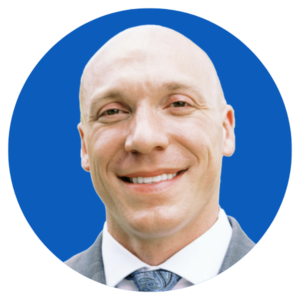
Brian Spear
Founder, Sunrise Capital
Brian helps high-net-worth investors build passive income through real estate syndications and tax-efficient wealth strategies.