
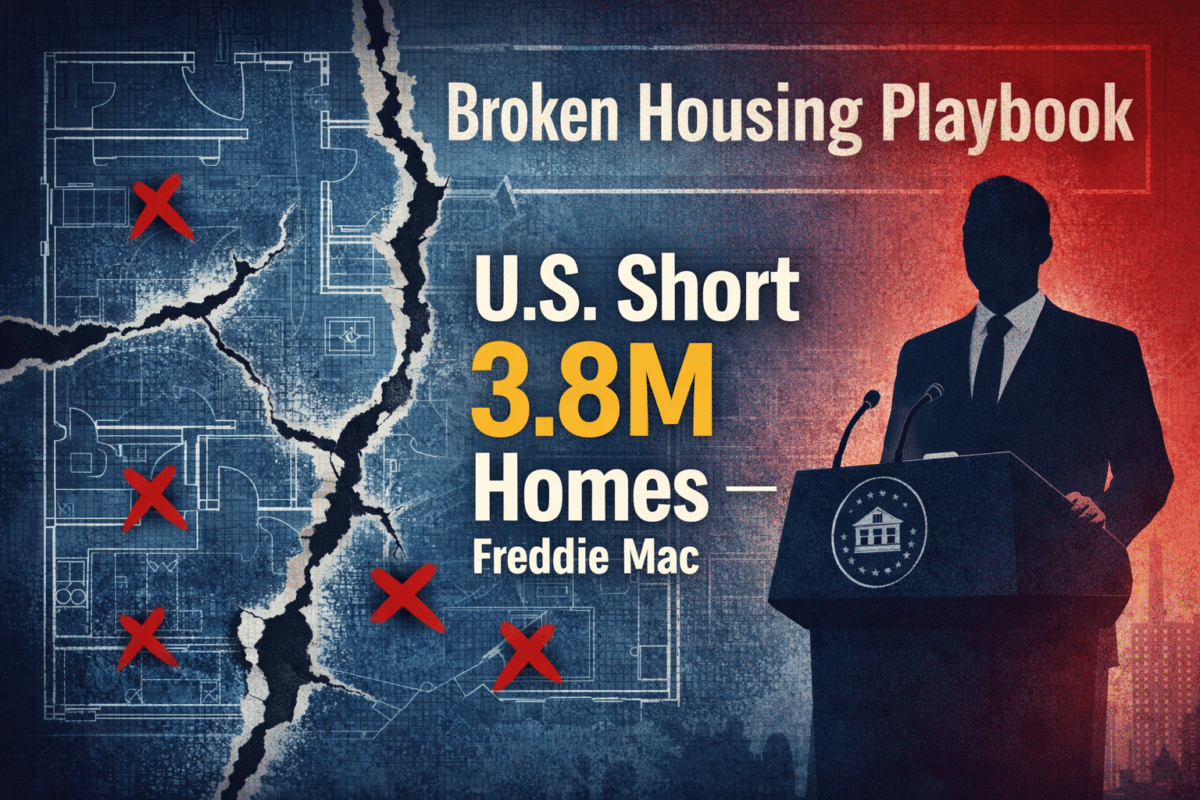
It’s Not Just About Affordability — The Real Housing Crisis Is Lack of Supply
We’re not in a housing crisis because Americans can’t afford homes.
We’re in a housing crisis because we don’t have enough homes to go around.
That distinction matters — especially if you’re a real estate investor.
The Real Problem: A Decades-Long Supply Deficit
For the last 15+ years, U.S. home construction has lagged far behind population growth.
Following the 2008 crash, developers pulled back. Financing tightened. Zoning rules got stricter. And yet the population — especially in Sunbelt metros — kept growing.
Freddie Mac estimates the U.S. is short 3.8 million housing units.
The result?
- Soaring prices
- Competitive bidding wars
- Rising rents — even in non-coastal markets
This isn’t just about affordability. This is about basic math: demand far outstrips supply.
Why This Crisis Persists
🛑 Zoning Laws Make It Hard to Build
Most cities are still zoned for single-family housing. Multifamily or high-density options — like mobile home parks — face heavy opposition from local governments.
Even when land is available, entitlement risk, NIMBY resistance, and anti-growth policies kill projects before they start.
🧱 Construction Costs Are Higher Than Ever
Labor shortages, material inflation, and regulatory burden mean it’s simply not profitable to build workforce housing in many areas.
As a result, most new supply being built is luxury Class A apartments — not homes average Americans can afford.
The Opportunity: Invest Where Supply Is Permanently Constrained
As investors, this should signal one thing:
The real upside is in supply-restricted housing segments.
That’s why at Sunrise, we target asset classes like:
- Mobile home parks (near-impossible to build new ones)
- Infill RV communities with long-term tenants
- Parking assets in cities with capped or declining parking supply
In every case, we’re looking for a supply imbalance that creates durable demand and pricing power.
What This Means for Investors
If you’re evaluating housing-related investments, ask yourself:
“Is this an asset class where future supply will flood the market — or is this a constrained segment with long-term demand?”
Smart investors go where new supply can’t follow. That’s how you preserve capital and build long-term yield — especially in volatile cycles.
💬 Want to continue the conversation?
